To provide the best experiences, we use technologies like cookies to store and/or access device information. Consenting to these technologies will allow us to process data such as browsing behavior or unique IDs on this site. Not consenting or withdrawing consent, may adversely affect certain features and functions.
The technical storage or access is strictly necessary for the legitimate purpose of enabling the use of a specific service explicitly requested by the subscriber or user, or for the sole purpose of carrying out the transmission of a communication over an electronic communications network.
The technical storage or access is necessary for the legitimate purpose of storing preferences that are not requested by the subscriber or user.
The technical storage or access that is used exclusively for statistical purposes.
The technical storage or access that is used exclusively for anonymous statistical purposes. Without a subpoena, voluntary compliance on the part of your Internet Service Provider, or additional records from a third party, information stored or retrieved for this purpose alone cannot usually be used to identify you.
The technical storage or access is required to create user profiles to send advertising, or to track the user on a website or across several websites for similar marketing purposes.


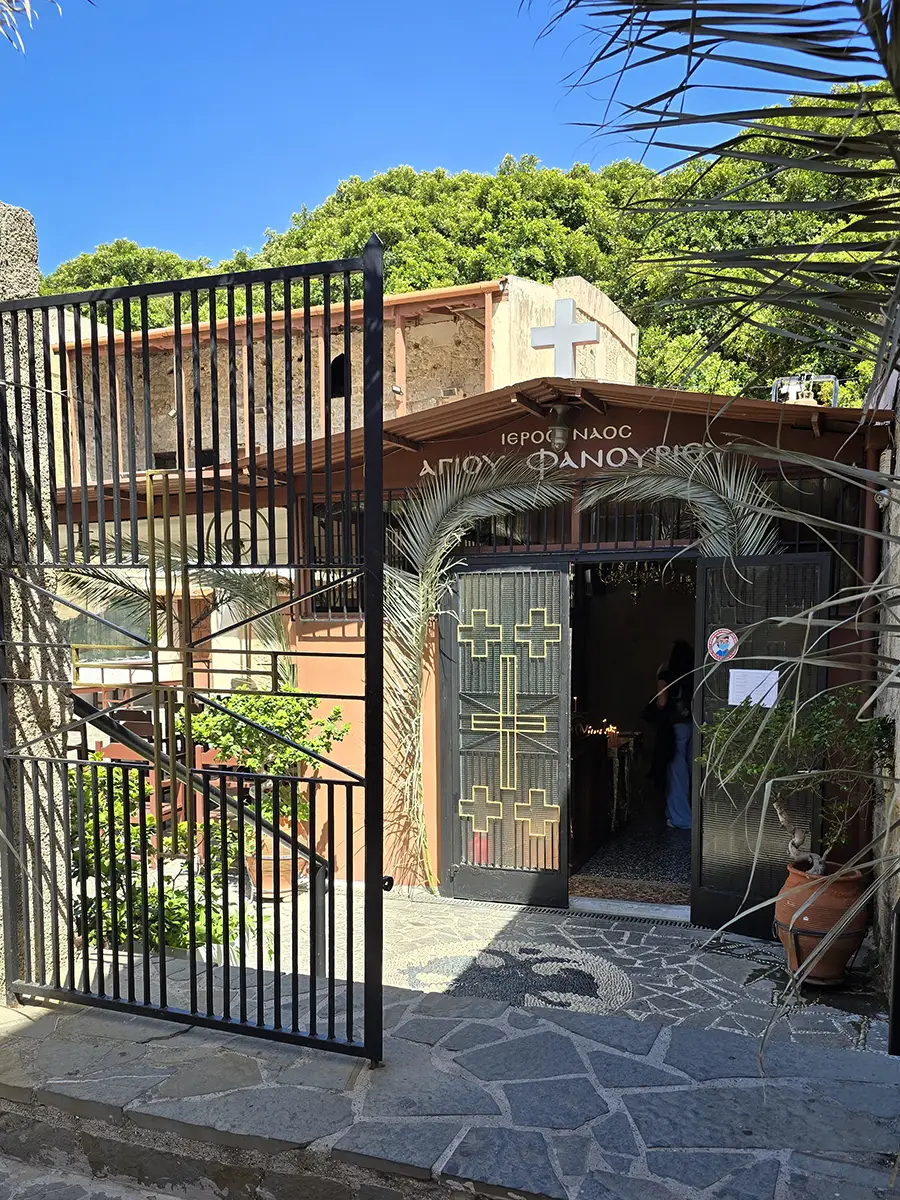
Lazarus Saturday in Rhodes: A Unique Easter Tradition You Should Experience
Lazarus Saturday in Rhodes: A Unique Easter Tradition You Should Experience
In Rhodes—as throughout Greece—Easter traditions are deeply rooted in history and rich in meaning. Many of these customs have remained unchanged for generations, carefully preserved and passed down over time. Among the most beautiful and symbolic traditions is Lazarus Saturday, celebrated eight days before Easter, on the Saturday preceding Palm Sunday. It commemorates the resurrection of Lazarus by Jesus Christ and serves as a powerful prelude to the Resurrection.
More than just a religious observance, this day symbolizes the triumph of life over death and marks the beginning of the final journey toward Holy Week and Greek Orthodox Easter.
A Tradition That Comes to Life
Across Greece, one of the most distinctive customs of the day is the singing of Lazarus carols (Kalanta tou Lazarou). Children walk from house to house, holding palm branches and flower-filled baskets, singing traditional songs that echo through villages and neighborhoods alike.
It’s a simple yet deeply moving tradition—one that brings communities together and fills the air with a quiet sense of celebration.
Lazarus Saturday in Rhodes: Where Tradition Feels Alive
In Rhodes, this tradition is not just preserved—it is truly lived. Despite the island’s vibrant tourism scene, its villages remain deeply connected to their roots. Lazarus Saturday, in particular, is celebrated with warmth, authenticity, and a strong sense of community, offering visitors a rare glimpse into local life beyond the usual travel experience.
Preparations Begin the Day Before
The preparations start on Friday, setting the tone for what follows. Locals gather palm leaves—known as vagia—and carefully weave them into small crosses. These are later distributed to homes along with fresh flowers. At the same time, delicate garlands made from daisies are crafted, along with a beautifully decorated palm branch that will be carried by the child representing “Lazarus.”
By Friday afternoon, everything is taken to the central church, where it will be blessed during the Saturday morning service.
“Singing Lazarus” Through the Villages
On Saturday morning, the sound of church bells fills the air as locals gather for the Divine Liturgy. Once the service ends, the Lazarus Carols (Kalanta tou Lazarou) begins.
Children, wearing daisy garlands around their heads and necks, set off through the village streets. At the center of the group is “Lazarus”—usually a young boy dressed in white, holding the decorated palm branch.
As they visit each home, the atmosphere becomes both intimate and welcoming. The homeowner places a cushion on the floor, where “Lazarus” kneels to recite his part of the carol, while the other children continue singing.
When the carols ends, flowers are gently scattered inside the house, palm crosses are offered as blessings, and the children receive small gifts—eggs, sweets, or coins—in return.
One charming local belief adds to the uniqueness of the day: the floor should not be swept afterward, as doing so would symbolically remove the blessing.
The Connection to Palm Sunday
After completing their visits, the children return to the church, leaving behind the decorated branch and any remaining crosses.
These are then distributed to the faithful the following day, on Palm Sunday—one of the most significant celebrations in the Greek Orthodox calendar, commemorating Christ’s triumphant entry into Jerusalem.
A Taste of Tradition: Lazarus Bread
No Lazarus Saturday in Rhodes would be complete without Lazarus bread, also known as Lazarakia. These traditional sweet breads, shaped like a wrapped figure representing Lazarus, are made with walnuts, dried figs, raisins, sesame seeds, and fragrant spices. Their distinctive shape and flavor make them a highlight of the day.
In many villages, they are still baked in wood-fired ovens, filling the streets with warm, irresistible aromas. Visitors can also find them in local bakeries across the island during this period.
Why Lazarus Saturday in Rhodes Is Worth Experiencing
Lazarus Saturday in Rhodes offers more than a glimpse into a religious tradition—it reveals the heart of the island itself. From the children singing carols through village streets to the handmade palm crosses, the shared rituals, and the flavors of Lazarakia, every detail reflects a culture that values connection, faith, and continuity. For travelers searching for authentic experiences in Greece, this is a moment where tradition is not staged—but lived.
So, if you’re planning to visit Rhodes during Greek Orthodox Easter, be sure to include Lazarus Saturday in your itinerary. It’s a unique opportunity to experience the island through its traditions and customs, connect with local life, and discover a side of Rhodes that many visitors never see.
More posts