To provide the best experiences, we use technologies like cookies to store and/or access device information. Consenting to these technologies will allow us to process data such as browsing behavior or unique IDs on this site. Not consenting or withdrawing consent, may adversely affect certain features and functions.
The technical storage or access is strictly necessary for the legitimate purpose of enabling the use of a specific service explicitly requested by the subscriber or user, or for the sole purpose of carrying out the transmission of a communication over an electronic communications network.
The technical storage or access is necessary for the legitimate purpose of storing preferences that are not requested by the subscriber or user.
The technical storage or access that is used exclusively for statistical purposes.
The technical storage or access that is used exclusively for anonymous statistical purposes. Without a subpoena, voluntary compliance on the part of your Internet Service Provider, or additional records from a third party, information stored or retrieved for this purpose alone cannot usually be used to identify you.
The technical storage or access is required to create user profiles to send advertising, or to track the user on a website or across several websites for similar marketing purposes.


Unveiling the Captain’s Houses of Lindos: A Must-See
Unveiling the Captain’s Houses of Lindos: A Must-See
The enchanting village of Lindos, on the island of Rhodes, captivates visitors not only with its imposing Acropolis and ancient history but also with the authentic architecture of its picturesque narrow streets. Uniform whitewashed houses with hidden courtyards form a settlement of perfect harmony, unlike anywhere else on the island. Among them stand the Captain’s Houses of Lindos, traditional residences of exceptional character, refined craftsmanship, and historical value—true architectural treasures of local heritage.
What are the Captains Houses of Lindos?
The Captain’s Houses (Kapetaneika Spitia) are the grand mansions of Lindos’ wealthy sea captains. Built between the 16th and 18th centuries, they are outstanding examples of architecture influenced by Byzantine, Frankish, and Arab styles. For their owners, these were not merely homes, but powerful symbols of prestige and social status within Lindian society, reflecting their maritime success and prosperity.
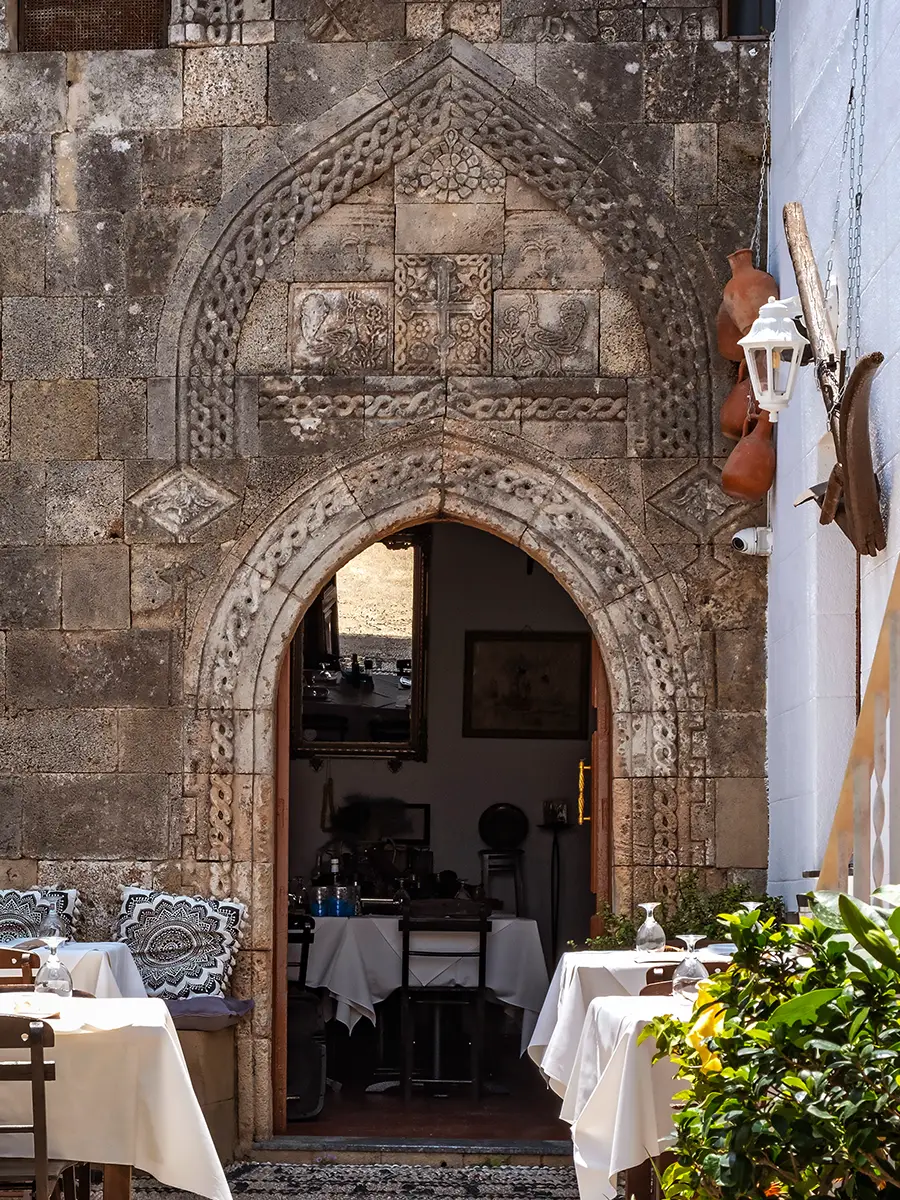
These impressive houses stand out for their large scale and stone-built walls made of porous limestone. They feature expansive enclosed courtyards decorated with intricate pebble mosaics showcasing striking geometric and symbolic patterns. Equally distinctive are the “Pyliones”, the imposing entrances with heavy wooden doors.
Entrances and windows were often adorned with carved relief decorations, including sculpted rope chains. Interestingly, the number of chains symbolized how many ships the house owner possessed—an unmistakable mark of wealth and influence.
Interior Layout and Unique Architectural Features
Each Captain’s house included a private room reserved exclusively for the owner, known as the “Captain’s Ontas.” This room was completely independent from the rest of the house, located on the upper floor with windows facing the sea and its own separate external entrance.
The main living space was called the “Sala,” richly decorated and architecturally impressive. A defining feature of this room was the “Kamariko,” a large arch that divided the space into two sections, creating both functionality and visual impact.
Equally remarkable was the “Pataros,” a raised wooden platform inside the Sala. Elevated above the floor, it served as the sleeping area for the family. It was divided into two sections by small steps: one for the couple, covered with a rare, hand-embroidered textile known as the “Sperveri.” These embroidered covers were considered extremely valuable, as very few women at the time possessed the skill to create them. The second section of the Pataros was used by the children, while the interior space beneath served as storage.
The Captain’s Houses Today – Museums, Landmarks & Living Heritage
Many of these historic mansions have been carefully restored, and as you stroll through the narrow alleys of Lindos traditional settlement, you can admire their preserved traditional architecture. Some operate as museums and occasionally open their doors to visitors. The most famous is the Papakonstantis Mansion, while other notable examples include the Ioannidis Mansion, Georgiou Mansion, Makris Mansion, and the Marietta Markoulitsa Mansion.
Several Captain’s houses of Lindos have also been repurposed into restaurants, cafés, and bars, such as the Lindian House Bar, where visitors can experience the atmosphere of old Lindos while dining inside a historic captain’s mansion.
A Living Legacy of Lindos
The Captain’s houses of Lindos are far more than elegant mansions. They are living monuments to the island’s maritime and commercial history, deeply intertwined with the identity and cultural heritage of Lindos.
Visiting these homes, even from the outside, provides a fascinating glimpse into the social dynamics, architectural styles, and seafaring traditions that have shaped this remarkable village. Each house tells a story, inviting visitors to connect with the legacy of those who once lived and thrived in this enchanting place.
More posts